
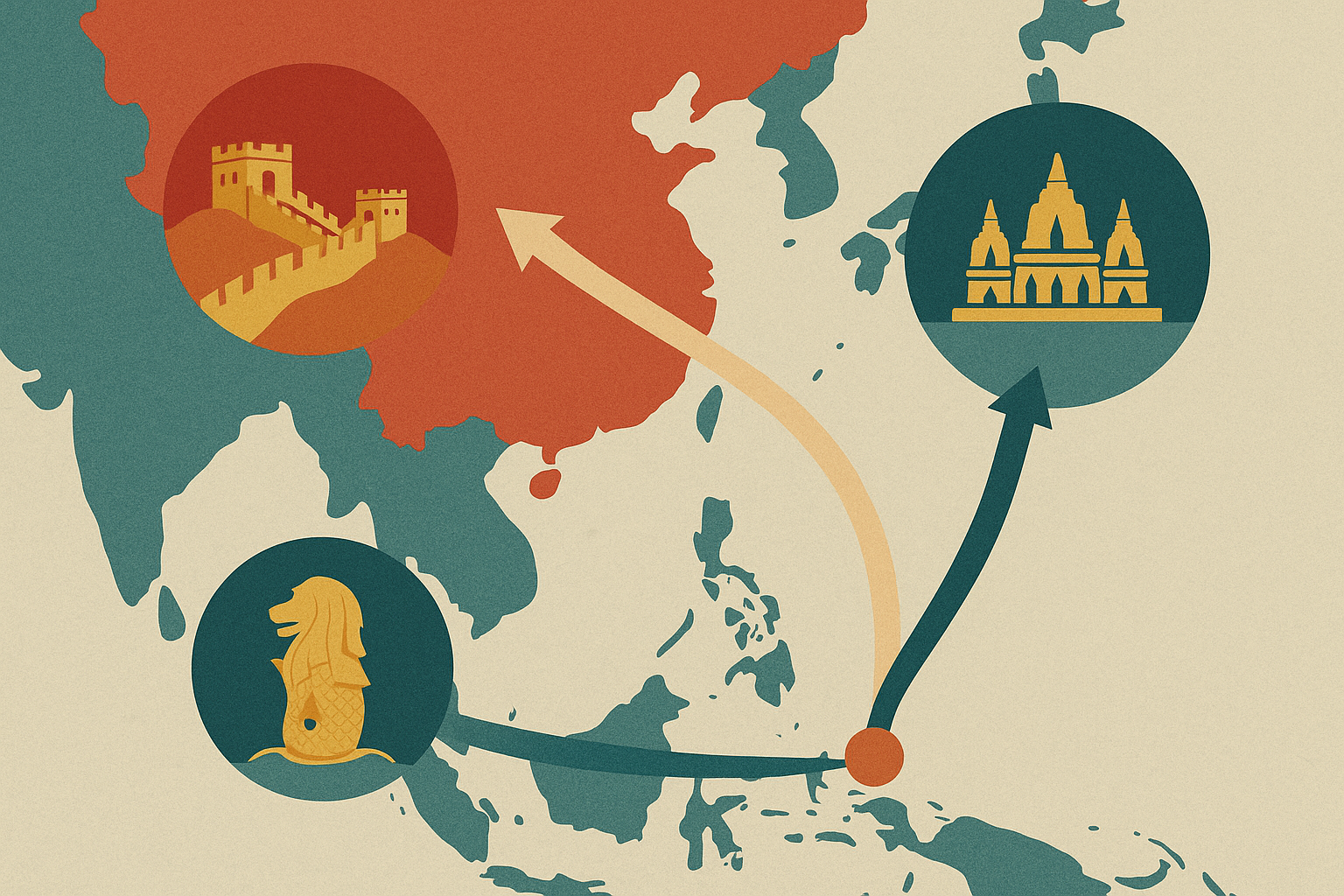
Asia’s economic centre of gravity continues to shift toward deeper China–ASEAN integration. In 2025, China–ASEAN trade reached RMB 4.93 trillion (≈ US $685 billion) in the first eight months alone, growing nearly 10% year-on-year. ASEAN now accounts for 17% of China’s total trade, highlighting the region’s strategic importance in global supply chains.
The partnership is powered by complementary strengths — China’s manufacturing and capital capabilities combined with ASEAN’s young workforce, consumption growth, and rising digital economy. The forthcoming China–ASEAN Free Trade Area 3.0 will further expand cooperation in technology, sustainability, and supply-chain resilience.
At the centre of this regional network stands Singapore — a trusted hub linking China with Southeast Asia and the wider Asia-Pacific— and for Southeast Asia and the wider Asia-Pacific companies entering China — Singapore serves as a neutral, efficient, and globally connected hub. It is where capital meets opportunity, and where risk is managed through governance and foresight. With its world-class logistics, strong rule of law, and status as a leading offshore RMB centre (RMB 276 billion in deposits as of 2024), Singapore anchors capital, trade, and innovation flows across the region. Its extensive free trade and tax treaty network makes it the natural base for regional expansion and investment structuring.
Opportunities lie in supply-chain realignment, digital connectivity, infrastructure financing, and the green economy — sectors where Singapore’s financial and governance ecosystem adds value.
Risks, however, remain: geopolitical tensions, and regulatory fragmentation within Southeast Asia and the wider Asia-Pacific could test resilience.
Ultimately, Singapore’s enduring advantage lies in its ability to translate regional diversity into opportunity, serving as the bridge where China meets ASEAN — and Asia connects with the world.